

Brand strategy · Creative strategy · Consumer psychology

What brands assume vs. what people actually do.

I turn the gap between what brands assume and what people actually do into brand and creative strategy.

Nine brands.
One question.

Deeply and Kreedl are client work. Others are academic, not commissioned.

Deeply Foods They assumed: Quote 7.5g and it sells My insight: Fibre sells as food, not a figure Kreedl They assumed: Lead with the AI My insight: Sell the outcome, not the feature Strava They assumed: It’s a fitness tracker My insight: It’s a stage to be seen on Innocent They assumed: Green claims build trust My insight: Only checkable proof does
Joe & The Juice They assumed: Ads can carry the promise My insight: The counter must prove it first
Victoria’s Secret They assumed: Responding proves change My insight: Inclusion became a selling point
Make It Count They assumed: Awareness stops waste My insight: Stress, no plan, cooking alone
AI Disclosure They assumed: AI labels hurt all brands My insight: It depends what people are buying
Attention & Memory They assumed: Multitasking kills recall My insight: A priority cue can protect it

Case 01 · Client project · Brand messaging · Feb–Jul 2026

Deeply Foods deeplyfoods.com ↗

What if people don’t need more information about fibre?

Brands assumed
Quoting 7.5g of fibre would make people buy.
People actually
Read 7.5g as just a number. A familiar food comparison gave it meaning.
The proof
I tested a 7.5g fibre ad vs a convenience ad on 133 UK adults. The number made no difference.
The strategy
Stop leading with the number. Translate 7.5g into foods people know, like berries.
The creative
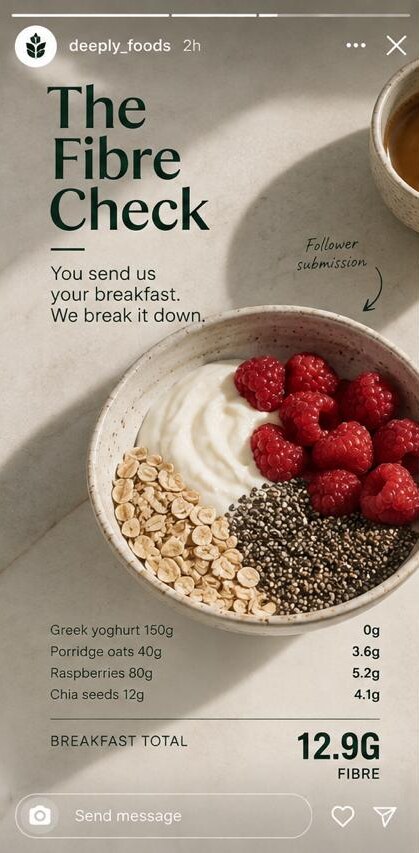
Rate My Fibre, an 8-week Instagram series. Followers send a meal, Deeply rates its fibre.
3.8×more views on food Reels, my evidence
+21%average likes after Deeply used my direction*

*Public data, conservative comparison. Directional only.

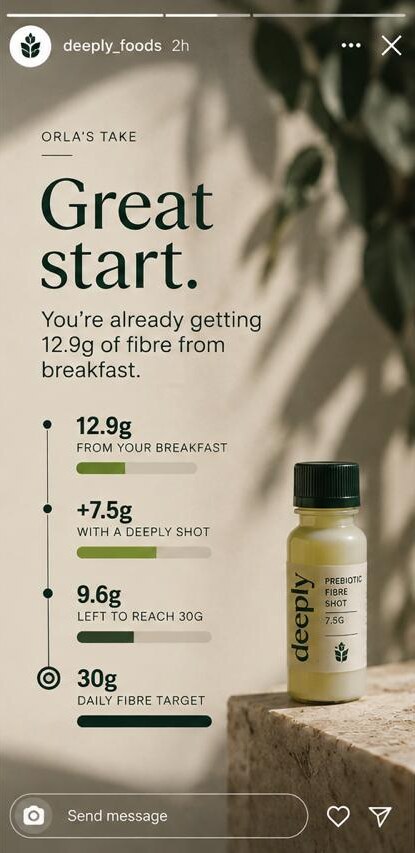
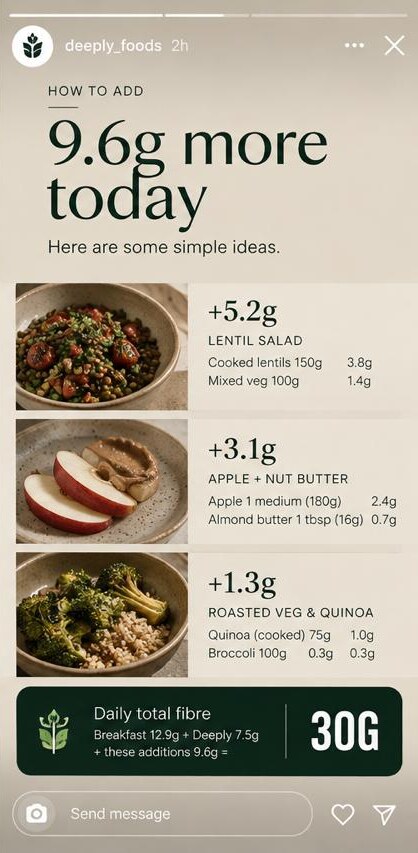
Deeply Foods Instagram story 1 of 3: The Fibre Check. A follower's breakfast bowl, broken down to 12.9g of fibre. Story 2 of 3: Orla's take. Great start, 12.9g from breakfast, 7.5g with a Deeply shot, 9.6g left to reach 30g. Story 3 of 3: How to add 9.6g more today. Lentil salad, apple with nut butter, roasted veg and quinoa.

Case 02 · Fractional CMO · Brand positioning & creative · 2026

Kreedl kreedl.com ↗

How do you reach hundreds of property managers every day?

The startup assumed
An AI proptech should lead with the technology: AI hotline, automation, speed.
My role
Fractional CMO. Brand positioning, brand stories, segment choice and the ad creative for a self-serve onboarding launch.
The creative
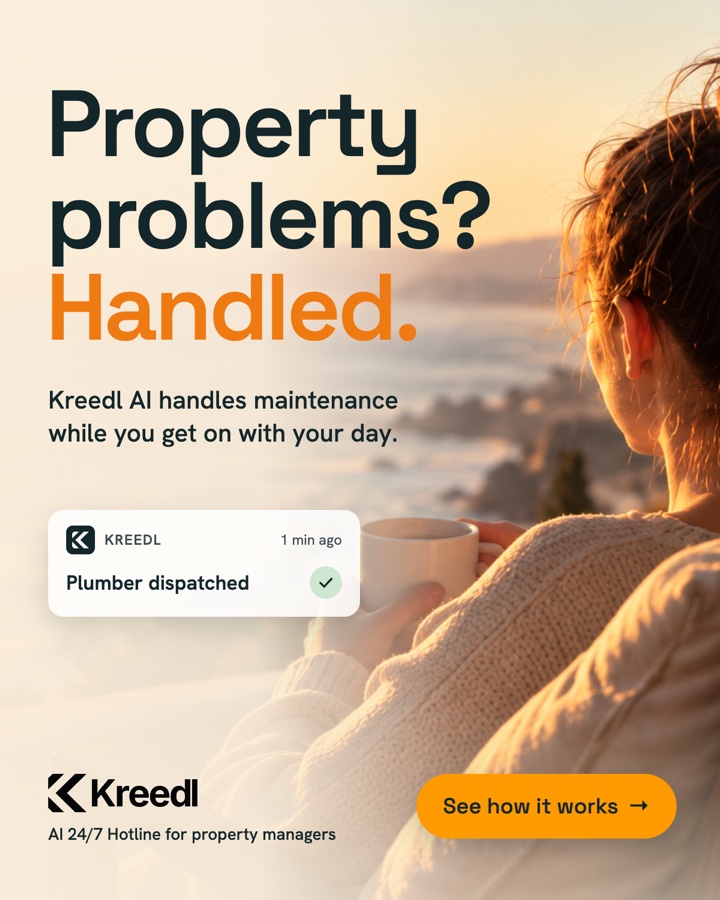
Ads that sell the outcome, not the feature. “Property problems? Handled.” and “Sleep through maintenance.”, with a resolved-ticket notification as the proof.
4.7×the click-through rate after I rebuilt the creative
−41%cost per website visit in the second round
2.8%click-through rate on the best-performing ads

Ongoing engagement · 30+ Meta ads so far. Creatives shown are live ads I wrote and art-directed.

Kreedl ad: Property problems? Handled. A property manager with a coffee by the sea, and a Kreedl notification saying Plumber dispatched.
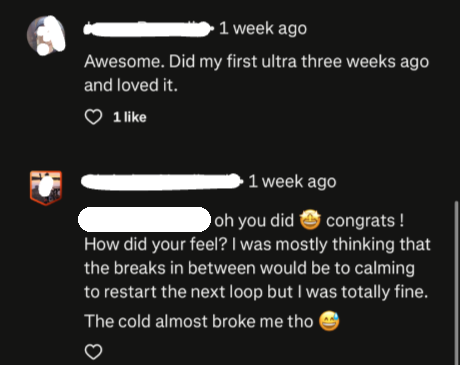
Comment thread under a Strava post about a first ultra run

Case 03 · Strava

Why do we post runs nobody asked to see?

Stats get kudos. Stories get replies.

Consumer psychology · Brand community · 2025

Brands assumed
Strava is a fitness tracker with a community.
People actually
Post runs to be seen and get kudos, not to talk to each other.
The behaviour
In a 66,758-member club, most just watch. A few regulars post, and kudos (likes) replace talk.
The psychology
People post to be seen and recognised. Visibility, not connection, is the reward.
The amplifier
One run is posted to several big clubs at once, to multiply the audience, not friendships.
For brands
To spark real talk, ask “what nearly made you stop?”, not “what was your pace?”
66,758members in the club I studied
466kudos on one post, only 8 comments
2months of observation, Oct–Nov 2025
4behaviour patterns I identified

MSc case study, Queen Mary University of London · Public data, anonymised
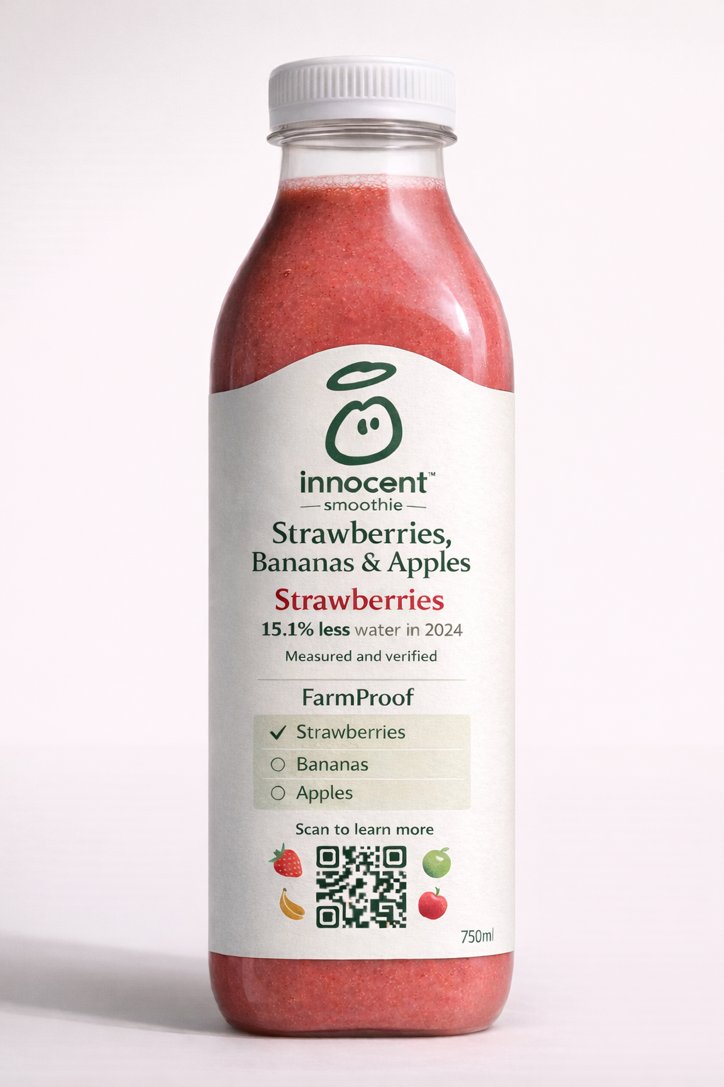
Innocent smoothie bottle with a FarmProof label showing verified strawberries

Case 04 · Innocent Drinks

When do green claims make people trust you less?

Not perfect. Just proven.

Brand positioning · Pack and creative concept

Brands assumed
More green claims would build more trust.
People actually
Distrust green claims they can’t check, and trust proof they can see.
The tension
In 2022 the UK ad regulator ruled against an Innocent green ad. Its real farm proof never reached the pack.
The positioning
FarmProof, the only fruit range that shows what is proven and what isn’t, at the same price.
The creative
Each fruit tagged Verified or Still measuring, a QR to the farm data, and the line Not perfect. Just proven.
The measure
Admitting a gap earns more trust than claiming perfection. Shopper trust before vs after launch, and sales vs the standard smoothie.
1new product and pack concept
£0price premium, so no barrier to trial
10–40%water saving, the proof I put on pack
2launch KPIs, trust and sales

MSc case study, Queen Mary University of London · Not commissioned

You’ve seen the tip.
Let’s talk about the rest.

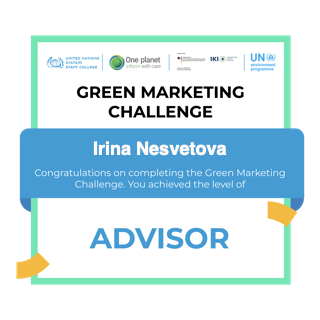
Certified Green Marketing Challenge · Advisor level UN System Staff College × UN Environment Programme View certificate ↗